The ongoing US-Iran conflict has forced the world to re-examine a few long-held assumptions beyond debunking the idea that gold is a reliable safe haven during crises. Apparently, nobody factored in inflation when coining that one. The conflict has also exposed cracks in the old global trade playbook: the Middle East supplies the power, Asia manufactures, and the West buys the goods. That model is shifting. Let’s look at what that means for Malaysia, and why “location” is about to matter more than ever.
Statement 1: The Middle East Supplies the Power
Malaysia’s power generation currently runs on three main buckets: coal (45%), gas (40%), and renewables (15%). Under the National Energy Transition Roadmap (NETR), Putrajaya aims to increase renewable energy to 70% of the energy mix by 2050, while phasing out coal. Gas, however, is a trickier story. Contrary to popular belief, Malaysia is already importing gas to supplement local supply, and projections suggest the country could become a net importer within the next 10 to 20 years.
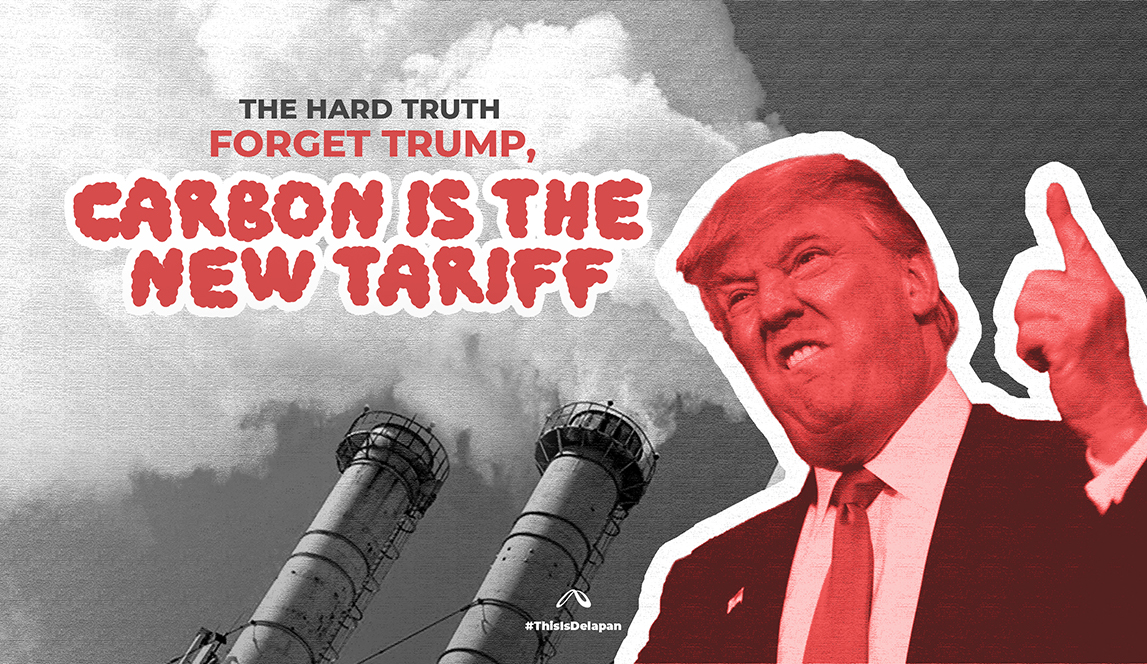
Before the war, Putrajaya was not worried about the supply of gas. However, when US President Donald Trump greenlighted the attack on Iran, apart from the departure of the late Ayatollah to heaven, coal is making a quiet comeback. Why? The current war shows that the global supply of gas is not secure and is often being used as a bargaining chip between countries. So, countries turned back to coal, and Malaysia need not look far. Indonesia is right next door, sitting on some of the world’s largest coal reserves. As for the argument that we still need Middle Eastern oil to fuel our trucks. At RM4.72 per litre, even your average Ali, Muthu, and Ah Hock can see that EV trucks are starting to make a lot of sense. So yes, bye-bye Middle East.
Statement 2: Asia Manufactures
This statement still holds, but the source of capital is changing. Historically, the money building Asia’s manufacturing base came from China or the Gulf (put aside the Western countries). That calculus is shifting. Middle Eastern capitalists are increasingly eyeing Southeast Asia as their new home base. Given the choice between sipping their morning coffee in Kuala Lumpur and watching Iranian Shahed drones circle over their offices in Abu Dhabi, Kuala Lumpur, with its Nasi Lemak croissants and functioning expressways, is winning. Where capital goes, manufacturing ambition follows.
Statement 3: The West Purchases the Goods
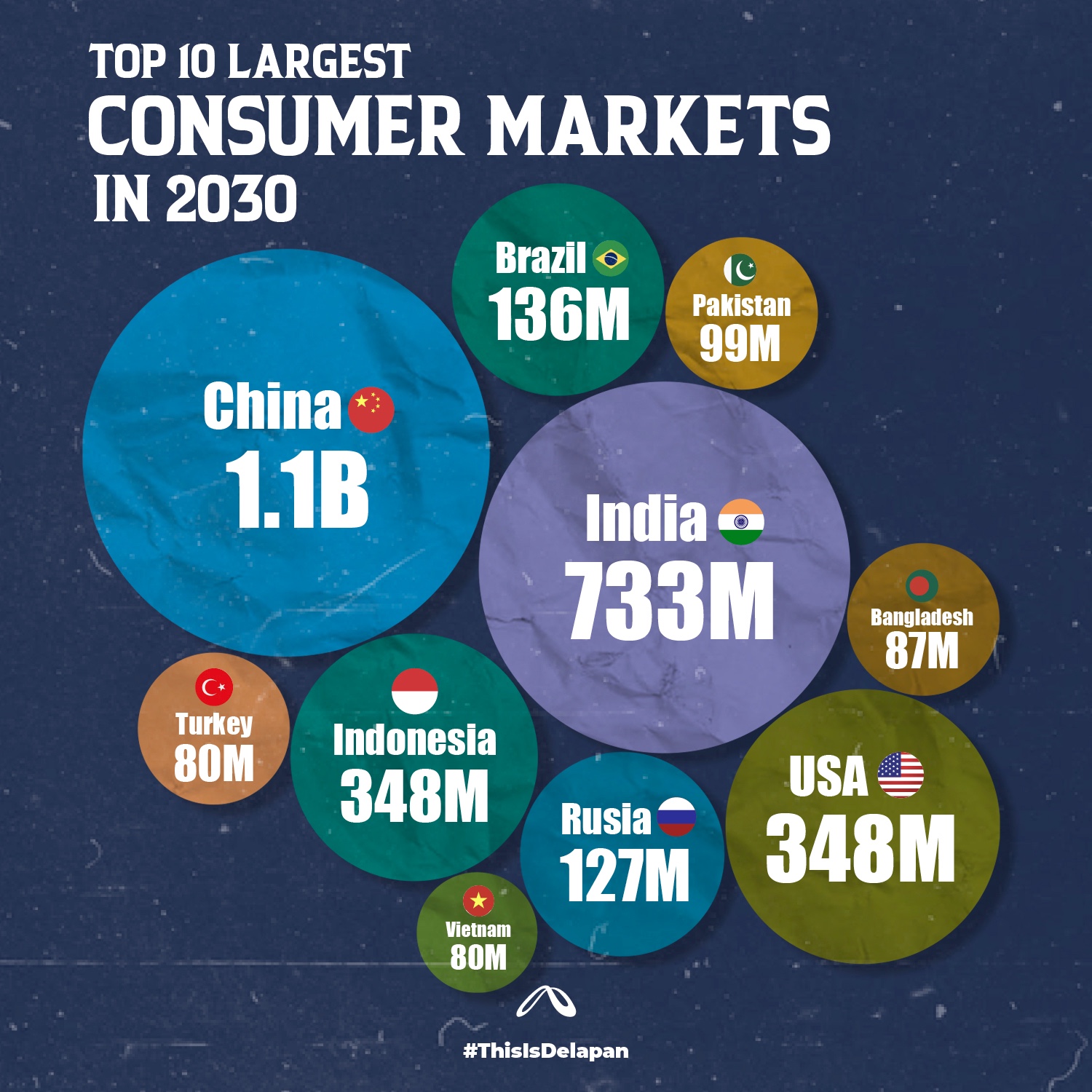
Here’s where it gets interesting. By 2030, 7 of the world’s 10 biggest consumer markets will be located in Asia. Western Europe is no longer the prized end market it once was. What this means, practically, is that trade routes are getting shorter. In the Malaysian context, the full chain now reads: Indonesia supplies the power (via coal), Malaysia manufactures, and China and India buy the goods (apart from our domestic market itself). The supply chain is collapsing inward, into Asia, and specifically into Southeast Asia.
So, what do we do with this information? This is where master developers of industrial hubs like Delapan need to lead the conversation, by doubling down on the oldest rule in property and investment: “Location, Location, Location.”
Location #1 — Investors will look at locations with a diversified energy supply
In a world where energy disruption is no longer a tail risk but a recurring reality, industrial investors want to know their operations will not be held hostage by a single fuel source. Delapan is built for exactly this. The development has direct pipeline access to natural gas, providing the reliable baseload energy that energy-intensive manufacturing and logistics operations demand. At the same time, its anchor tenants are already signalling the energy transition: the BKH Inland Port holds a Gold-rated Green RE certification, while InnoSphere, NCT Group’s 130-acre integrated industrial park, runs on solar power and carries a Silver-rated Green RE, making it the first industrial park development in Kedah to achieve that rating. Conventional and clean, side by side. That is what energy diversification looks like on the ground.
Location #2 — Investors will look for locations with redundancy in the supply chain
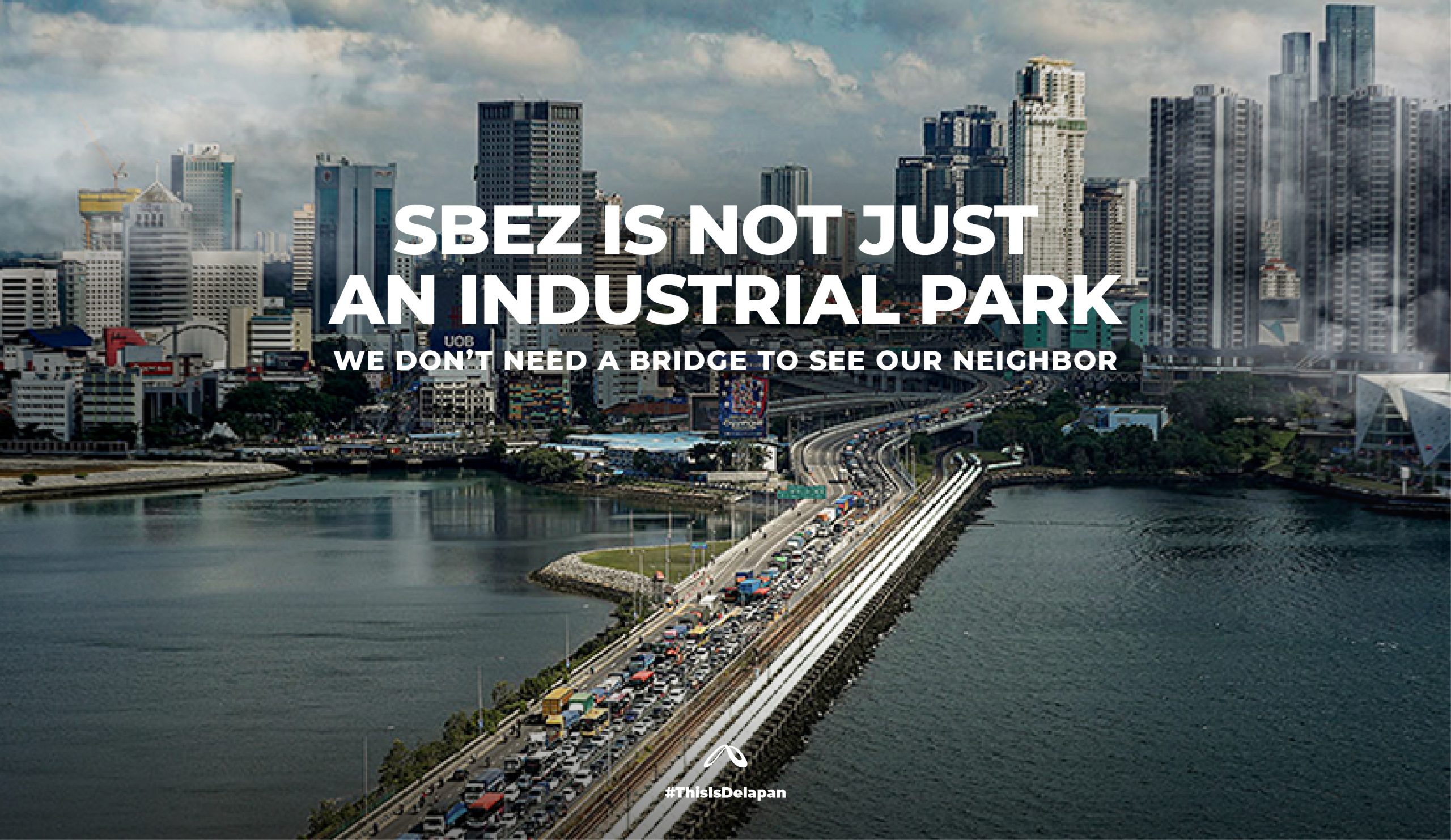
Supply chain resilience has moved from a boardroom talking point to a non-negotiable investment criterion. Post-COVID, post-Red Sea, post-every-disruption-we-said-would-never-happen — investors want optionality built into the location itself. Delapan delivers this on multiple layers. Sitting at the Malaysia–Thailand land corridor, goods can move through two active border crossings, Bukit Kayu Hitam and Padang Besar, so a bottleneck at one does not shut down the other. Beyond the border, the development sits within reach of two international seaports (Penang Port at 130km, Songkhla Port at 90km), three international airports, two inland ports, two rail stations, and four expressway connections, including the Asian Highway Network 2. And for those who think redundancy stops at physical infrastructure — think again. Both the Satun and Songkhla Cable Landing Stations, covering the Andaman and Gulf coasts respectively, are connected directly to Delapan at D8-1, providing dual-path international data connectivity. In short: no single point of failure, whether you are moving a container or a gigabyte.
Location #3 — Investors will look to set up shop near big markets
Market access is not just about which port you are near. It is about how quickly and cheaply you can reach the people buying your goods. On this front, Delapan’s case is difficult to argue against. At the immediate level, more than 4.4 million people live within a 150km radius, covering Perlis, Kedah, and Pulau Pinang on the Malaysian side, and Satun and Songkhla on the Thai side, giving businesses a ready consumer and labour catchment from day one. Zoom out and the numbers get more compelling: Delapan sits at the doorstep of a 650-million-strong ASEAN consumer market, one of the fastest-growing regional economies in the world. And this is not just a market of geography, it is a market in motion. In 2024 alone, Malaysia–Thailand bilateral trade reached approximately USD 13.55 billion, with over 6.2 million cross-border traveller movements recorded. Backing all of it is a combined network of 31 Free Trade Agreements across 65 countries, clocking USD 315 billion in trade value at a 76% utilisation rate as of 2023. Manufacturers and exporters based in Delapan do not just get proximity, they get preferential access.
The Bottom Line
The global trade order is being redrawn, not in decades, but in years. The old assumptions about who powers the world, who builds the goods, and who buys them are all up for revision. What remains constant is this: in every era of trade disruption, the locations that survive and thrive are the ones with diversified energy, resilient supply chains, and proximity to the markets that matter. Delapan, sitting 800 metres from the Malaysia–Thailand border at the intersection of land corridors, cable networks, and a shifting Asian consumer base, was not built for yesterday’s trade map. It was built for the one being drawn right now. Location, location, location — it was never just a property slogan. It is a strategy.